
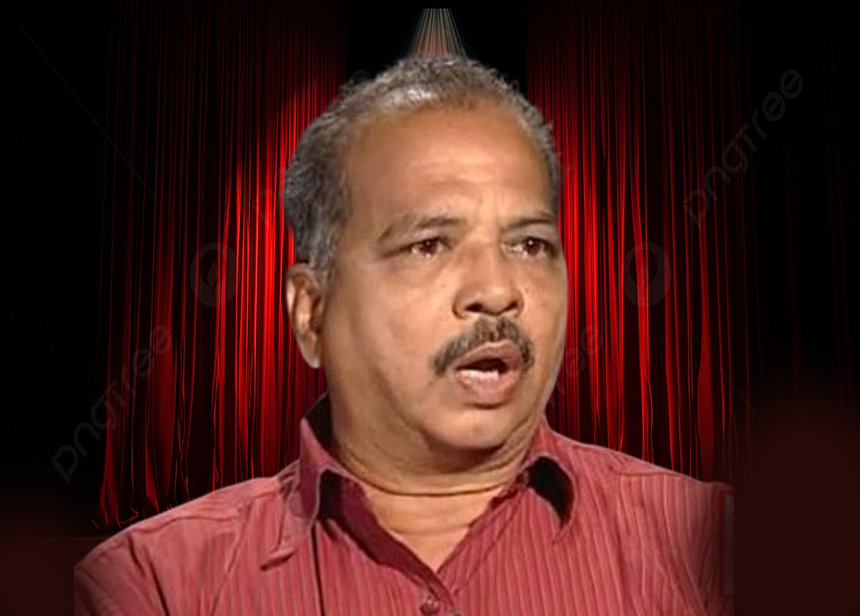
NAIDU GOPI — A LEGEND OF TELUGU THEATRE
THE MAN WHO MADE THE STAGE HIS TEMPLE: NAIDU GOPI — A LEGEND OF TELUGU THEATRE
By Special Correspondent
In the cultural heartland of Andhra Pradesh, where the ancient river Krishna meanders through fields of history and heritage, there lives a man whose life is itself a grand performance — one spanning more than four decades, thousands of curtain calls, and an unrelenting devotion to the art of theatre. Naidu Gopala Rao, beloved and celebrated across the Telugu-speaking world simply as Naidu Gopi, is not merely an actor or a director. He is an institution, a movement, and, for hundreds of aspiring artists, the very reason they dared to step onto a stage.
Roots in Red Soil: Early Life and the First Spark
Born on March 17, 1953, in the small village of Yendrai in the Amaravathi Mandal of what is today Palnadu District, Andhra Pradesh, Naidu Gopi came from a farmer’s family — people of the soil, people of substance. His parents, Prakasarao and Kamalmma, could not have imagined that the child they raised in the simplicity of rural Andhra would one day light up stages across the state and earn the distinction of being called one of South India’s finest stage artists.
From his earliest years, Gopi was drawn irresistibly to performance. As a young boy, he participated in a skit called Sanyasam, playing a comic character — and something clicked. He often recalls that this modest village performance planted the seed of a lifelong vocation, teaching him the fundamentals of timing, presence, and the electricity between performer and audience. That seed would grow into a towering banyan tree of artistic achievement.
A Guru, a Stage, and a Beginning
Every artist of greatness has a teacher who shapes their vision. For Naidu Gopi, that figure was Guntur Sastry, under whose mentorship at the cultural organisation Sastreeyam Gopi honed his instincts and found his artistic voice. In 1981, Gopi made his formal debut on the Telugu stage with Dear Audience, Sincerely Yours — a play written by the celebrated dramatist Isukapalli Mohana Rao. The audience’s response was immediate and overwhelming. Gopi recalls the thunderous, unrelenting applause that greeted his performance that evening as the happiest memory of his entire career — a moment that sealed his destiny as a man of the theatre.
Following years of dedicated work under his mentor, Gopi took a decisive step: he founded his own cultural organisation, Gangothri, in 1990. The name itself — evoking the sacred Himalayan glacier, the source of the Ganga — was deliberate, symbolic of a desire to be a fountainhead of creativity and culture. Gangothri’s founding mission was both artistic and social: to nurture acting talent among rural youth, to take theatre to villages, and to make drama a living, breathing force in the lives of ordinary people. Through Gangothri, Gopi would go on to train and mentor over 200 actors and actresses over the decades, leaving an indelible mark on the DNA of Telugu theatre.
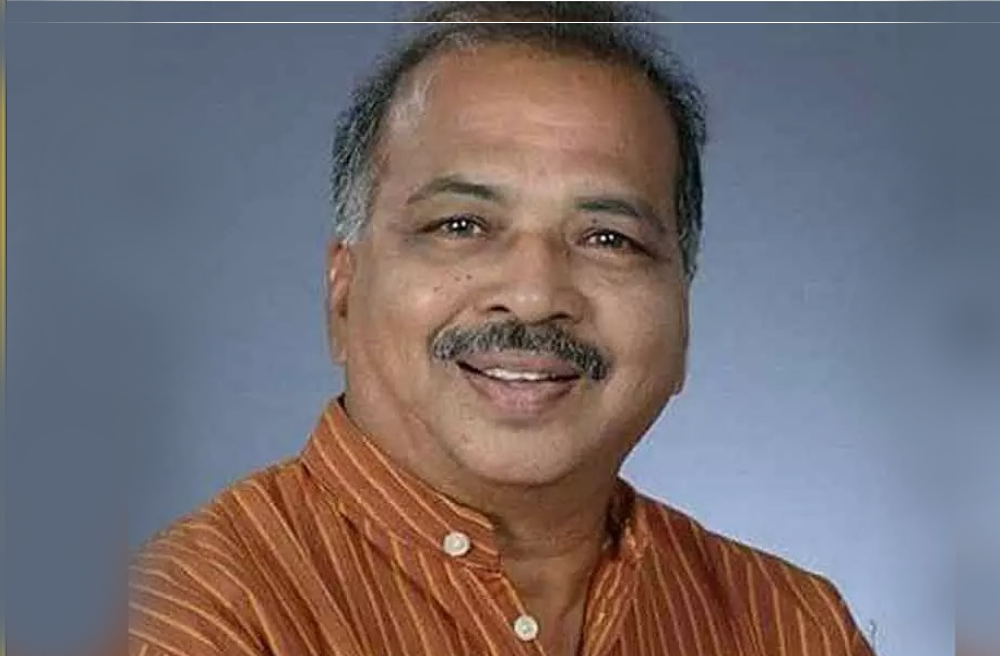
The Theatre: A Lifetime’s Labour of Love
If sheer numbers could capture dedication, Naidu Gopi’s record speaks for itself. Over the course of his career, he has delivered approximately 2,600 stage performances, earned recognition as Best Actor nearly 600 times, and been honoured as Best Director on over 400 occasions — figures that are staggering by any measure and virtually unparalleled in the history of Telugu theatre.
His repertoire spans the full spectrum of dramatic forms — full-length plays, one-act plays (natikalu), and the classical padya natakam (verse drama). In prose theatre, his works range from intimate domestic dramas to bold social commentaries. Plays such as Padamatigaali, Tharjani, Dahati Maanasam, Nishiddhakshari, and Manasa Sarovaram established his reputation in the 1980s and 1990s. His canon includes deeply layered works like Vanaprastham, Dokkaseetamma, Aksharakireetam, Pataaka Seerashika, Maaya, Gulabi Mullu, Galiib Ratukulu and Arasunnaa — each a window into the human condition, treated with empathy, intelligence, and theatrical flair.
Beyond contemporary prose drama, Gopi has been an equally passionate custodian of classical Telugu verse theatre. His productions of Palnati Bharatam, Hamsa Geetam, Sri Vemana Yogi, Gayopakhyanam, Sri Guru Raghavendra Charitam, Sri Ramaanjaneyudu Yuddham, Bala Nagamma, Taraakaasura, and Sri Krishnaanjaneyudu Yuddham demonstrate his mastery of an older theatrical tradition that demands not just performance but classical erudition. In a cultural era increasingly dominated by mass entertainment, his commitment to preserving and popularising verse drama has been a quiet act of cultural heroism.
His one-act plays — dozens of them — have been vehicles for sharp social observation. Works like Darpanm, Navvandi Idi Vishadam, Swetha Patram, Yadabavishyam, Bhoomi Putrudu, Edaari Koyil, Bharata Ratna, Misde Call, Oobi, Swargaarohanam, Buddhacharitra, Reverse Gear, and Vriddhopanishat — among many others — have been staged across Andhra Pradesh and beyond, bringing theatre to audiences who might never have otherwise experienced it.
The Nandi Awards: A Government’s Acknowledgement of Genius
In the world of Telugu theatre, the Nandi Awards — presented by the Government of Andhra Pradesh — represent the highest official recognition. Naidu Gopi has accumulated an extraordinary 16 Nandi Awards, a record that underscores his dominance in Telugu drama across three decades.
His first Nandi recognition came in 1998–1999, when his playlet Hinsadhwani was performed at the inaugural Nandi Natakostavam organised by the combined Andhra Pradesh Government. The valedictory ceremony was attended by then Chief Minister Nara Chandrababu Naidu, who personally presented Gopi with the Best Actor award and the Best Team award. Gopi has spoken with deep emotion about that moment — calling it the most memorable event of his career, even after all the accolades that followed.
The awards continued to recognise his directorial brilliance year after year. He received the Nandi Award for Best Director for Vanaprastham in 1999, for the playlet Edaari Koyil in 2000, for Aambotu in 2004, for the verse play Palnati Bharatam in 2005, for Dokkaseetamma in 2013, and for Aksharakireetam in 2016. In 2019, the Aparna Nataka Kala Parishath of Tadipatri also honoured him with the Best Director award for Aksharakireetam, reflecting the breadth of his recognition beyond state-level forums.
From the Stage to the Silver Screen
While the theatre has always been Naidu Gopi’s first love, his talent inevitably attracted the attention of Telugu cinema. Over the years, he built a credible and memorable body of work as a character actor in Tollywood, bringing to the screen the same depth and authenticity that had won him thousands of standing ovations in the theatre.
His filmography is a roll call of some of Telugu cinema’s most celebrated productions. He appeared in Prajateerpu, Union Leader, Singanna, Telugodu, Nenunnanu — in which he played a paralysed father opposite actress Shreya — and Bhadradri Ramudu. He featured in Mister and Mrs Shailaja Krishnamurthy, Leela Mahal Centre, and Seshadri Naidu. His work in Okkaade Kaani Iddaru, Pandu, Ori Nee Illu Bangaram Kaanu, Nimisham, and Apadamokkulavadu further established his range as a versatile supporting actor.
Some of his most prominent screen appearances came in major Telugu productions. He was part of Mahatma, in which he played a lawyer. He appeared in Leader and Dammu, and brought his characteristic screen presence to the comedy-entertainer Jalleega Enjoy Cheddham. His most high-profile film credits include the blockbuster Drishyam and its sequel Drishyam 2 — both starring Venkatesh Daggubati — as well as the Chiranjeevi-starrer Khaidi No. 150, all of which brought his work to pan-India audiences.
Television: Reaching Every Household
Parallel to his theatrical and cinematic career, Naidu Gopi has been a consistent and beloved presence on Telugu television, starring in a wide range of popular serials that brought his talent into the living rooms of millions of households. His television appearances include the serials Mister Brahmanandham, Hima Bindu, Matti Manishi, Satyam, Padmavyuham, Bandhavyaalu, Malleeshwari, Mahalakshmi, Laya, Sri Anjaneyam, Aakaasha Ganga, Letha Manasulu, Sudigundaalu, Manasu Mamatha, Daamini, and Brahmamudy. Across these serials, spanning family drama, mythology, and social themes, Gopi demonstrated the same commitment to craft that defined his stage career.
Honours from the State: Kalaratna and YSR Achievement Award
Naidu Gopi’s contributions to Telugu art and culture have been formally acknowledged by the Government of Andhra Pradesh on multiple occasions. In 2017, he was presented with the prestigious Kalaratna Award on the occasion of Ugadi — the Telugu New Year — in recognition of his lifetime of service to the arts. In 2022, he received the YSR Achievement Award, conferred by the state government as testament to the enduring impact of his multifaceted career.
A Social Vision: Theatre as a Tool for Change
What sets Naidu Gopi apart from many of his contemporaries is not merely his artistic brilliance, but the social conscience that has driven his work throughout his career. Through Gangothri, he has consistently used the medium of theatre to hold a mirror up to society — addressing issues of injustice, hypocrisy, rural distress, and human dignity with the power of performance. Many of his plays have been produced and performed in rural settings, taking drama to audiences who do not have access to urban cultural spaces, continuing a tradition of grassroots theatre that connects art to life.
His investment in the next generation of artists has been equally remarkable. Having personally trained and mentored over 200 performers, he has ensured that the flame of Telugu theatrical tradition will be carried forward by capable hands — a legacy that may, in time, prove as significant as his own performances.
Curtain Call: The Legend Lives On
More than four decades after a young man from Yendrai first walked onto a stage and felt the surge of an audience’s applause, Naidu Gopi remains a vital, creative, and inspiring force in Telugu cultural life. He has crossed every boundary — stage, screen, and television — with grace and authority, but it is in the theatre, under the lights, with a live audience before him, that his genius finds its truest expression.
In an age of digital distraction, when the very survival of theatre is sometimes called into question, Naidu Gopi stands as proof of what committed, passionate, and purposeful stagecraft can achieve. His story is not merely the story of one man’s career — it is the story of Telugu theatre itself: its struggles, its glories, its service to society, and its enduring power to move, to question, and to illuminate.
The stage, for Naidu Gopi, has never been just a platform. It has been a temple. And he has served it with the devotion of a true believer.
Naidu Gopi is available for interviews and felicitation programmes through Gangothri Cultural Organisation.
- KANCHARLA SUBBA NAIDU